Saturday, September 12, 2015

'The National Recovery Walk 2015 Durham' AMAZING DAY, WOW!!!

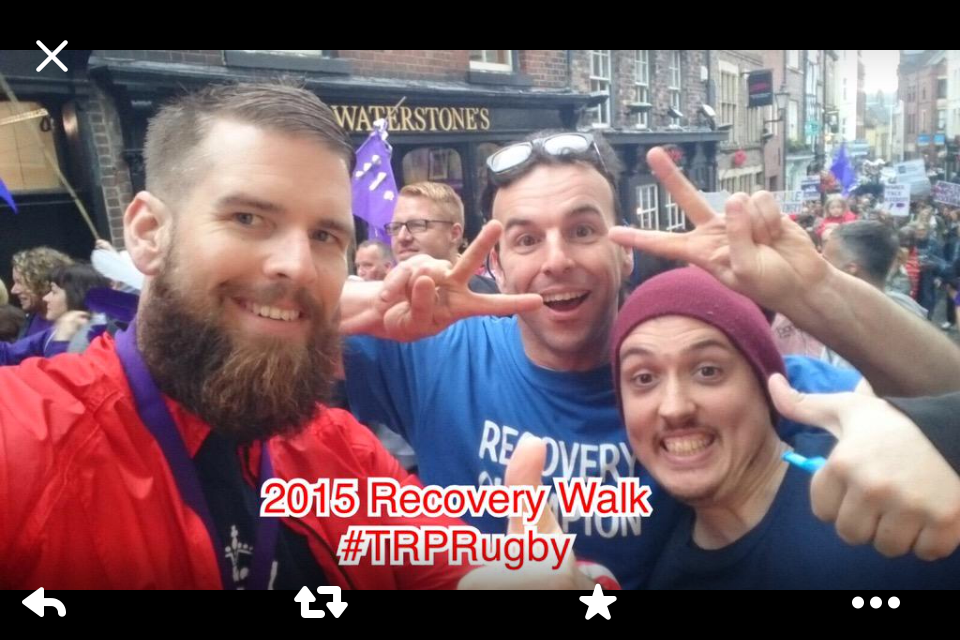
SO today I travelled with recovery communities from Rugby, Coventry and Leicester to Durham for 'The National Recovery Walk 2015 Durham'.  It was a long journey up there, I left Rugby at 6:30am, got on the coach at Coventry which departed there at about 7:45am/8am, we then did a pick up in Leicester and hit the road, arriving in Durham in 12:30.  Durham is a beautiful little typical Northern town i.e on a hill,cobbled street, picturesque etc.

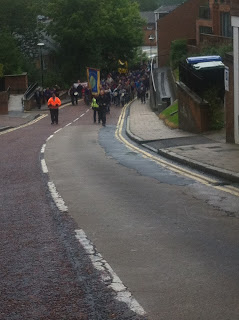
I didn't know quite what to expect when we got there but what we did find was overwhelming, there was thousands of using marching through the town, colourful, loud, marching band, whistle blowing awareness making noise! it was incredible to be a part of it as we marched through the town.

The Walk ended at a park where there was a series of stalls and stands, refreshments and a stage with live music etc, it was like a mini festival, truly amazing atmosphere.

We left Durham at about 4pm and got back to Coventry at about 8:30pm.  I loved every second of it, see the pics and vids below xxx


Friday, September 11, 2015

Todays Post, Im Feeling alot better, I've bashed off aload more emails and started a petition!!


Hi, welcome to todays post.  First of all let me say I am feeling alot LOT better then I did yesterday, I came the closet I have in 29 weeks to drinking but i managed not to and im thankful and proud of that more then I could ever say.

I am very excited about tomorrow, me and one of the other service users from 'The Recovery Partnership' Rugby are going to be attending and taking part in the National Recovery Walk 2015 in Durham, it should be a great day out.

Also today I have started an e petition on the government website in the hope of getting them to review there choice to dismiss the minimum alcohol unit pricing law and also to get them to address how alcohol is advertised, here is the link ;


I can not urge you  enough to show support and sign this.

I also sent off aload of emails, some of which to David Cameron, Health and Education Ministers and news agencies with the aim of creating awareness and trying to make a chance to the way things are.

Take care

From Karl


Thursday, September 10, 2015

Me Drunk v Me Sober the picture!!


The Drink Problem, The Solution, Education & Treatment


So in this post Im going to be talking about how we can solve and move forward issues with Eduction and Treatment of addictions.

Ok so lets begin with Education.  There are a few key points I think need to be addressed around the education of alcohol, drug and substance abuse, they are as follows;

• Firstly we can not educate with a ‘Just say No’ attitude as this will only cause natural rebellion, we need to use case studies and some shock and awe approach to simply give children the tools with which to make there own informed decision
 
• Education needs to be done as early as year 6 or 7 of education as kids are experimenting a lot earlier now days

• We need to dedicate more time to the education of the above matters so that we can arm our young with the information with which to make there own decisions

• At the same time as educating about the risks of alcohol, drug and substance abuse we also need to teach that should the children run into problems and become addicts that there is help available and there needn't be a stigma around reaching out and seeking help

I would love to some how campaign for all the above, not quite sure how i would do it, any ideas?  I might start by finding out who the education minister is and contacting them as well as teaching unions, thoughts please?

As for treatment well I feel we and the government need to support recovery charities a lot more and also there should be more setup so that the problem can be truly treat.  I also have a concept for a group training session as a first port of call for people who enter recovery, a course based around morally owning the decisions one has made in becoming an addict rather then blaming other people or factors, I don’t know how I would get this off the ground either! maybe contacting agencies and running demonstrations for them of the structure of the course.

Thats all for now, please offer feedback if you have any

From

Karl

Rant and then update, today has been challenging and nearest ive come to drinking again, but im ok now!!


So I write to you today somewhat teary and aggrieved and upset.  Whilst I have been on my journey there have been some people voicing negative comments, 2 in the last 48 hours in particular which have really gotten to me.

First of all someone on Facebook put a status which i can only presume was aimed at me about me ‘not really’ having a problem and using it ‘as an excuse’ to cover for my own uselessness, now I don't know 100% that was aimed at me but given all the links from the radio and this blog etc on that day and some of the things the person referred to I'm fairly confident it was.

Then today I picked up a message feed from an Ex Girlfriend who was with me when I decided to stop drinking and started my recovery.  She said ‘I don’t believe you, that you were an alcoholic because you wouldn't of been able to give up that easily’.....EASILY??!! FFS i would of loved easily i was and still is 29 weeks down the line a daily battle with the odds well and truly stacked against me, there is very little will power, confidence or happiness within and when cravings appear it is very hard to fight them.  There is someone else who has constantly been judging me and making comments as well, the fact is NO BODY really knows me on a daily basis, or how bad demons were.  All I will say is i drank from the age of 14/15.  When I was 18/19 and first got manic depression (bi polar as its also known) i was drinking daily until i was at least 23, at the same time as drinking especially around the age of 19 for a period of about 9/10 months i was hooked daily on alcohol, E Pills and lines of cocaine.  I moved to Butlins in Bognor Regis to escape the drugs but I was still drinking heavily and smoking cannabis.

Once I hit 23 I was in a happy relationship and I curbed the drinking down to a social level and all was good.  But then once that broke up and I relapsed mental mental health wise in 2008/2009 i started drinking daily again to a much higher level.  Mon-Fri or shall we call them normal days I was drinking between 8-12 Pints of Lager, In the evening time chasers of Jack Daniels or Rum and just to sip on when thirsty out the fridge 3 litre bottles of super strength cider.  Weekend days or days out parties etc the chasers became more often and it was 12-16 pints a day, every single day no days off.  I would not get out of bed without drinking a can of lager or a shot of Jack.

Only I know my demons and how much I was abusing alcohol and myself and only I know how much i struggle daily still 29 weeks down the line not to go back to that, it takes all my strength and help from support i get at The Recovery Partnership, even now cuts of all these comments all I want to do is go “fuck it, maybe your right, lets go get pissed” but Im stronger then that now and determined not to cave in and go back to that poor standard of life, at the rate I was drinking and my mental health relapse I would estimate that within 2 years at the most I would of been dead for one reason or another, most likely because i would of killed myself or given myself liver disease or alcohol poisining.

People need to sort there own lives and issues out and leave me alone, walk a mile in my shoes before you judge me!.

Ok so lets try and be positive now, so its now later in the day and I have attended a MAPs group meeting which helped massively and we talked through everything and I'm ok now, so here is positive stuff;

- So today Im up at Recovery doing a maps group to get a bit of support and proping up again and socialisg with a fast growing network of friends

- I have done 10 Mindfulness CD’s for Recovery to hand out to service users and they have been very well received and snapped up in no time so I'm going to work on doing some more with professional packaging etc

- I am going to be sending off some more emails etc to try and make things happen later on and making as much noise as possible about addiction and recovery during what is ‘National Recovery Month’

- In November one way or another I will be attending ‘The National Recovery Conference’ a 2 day event in Manchester with endless high end networking opportunities 

- I stuck up info on this blog and links etc in the waiting room at Recovery today

- I have connected with a recovery service in Coventry and they are keen for me to get very involved with them and the work there doing, including a day conference event next week in Coventry

There is lots going on and its all positive and very exciting, I will write more tomorrow on what will mark 29 weeks sober!


Wednesday, September 09, 2015

my radio interview

https://www.facebook.com/video.php?v=1656177697961003&pnref=story

see this link, my interview on radio, news bit about me and then talking about me afterwards

Todays Update, been super busy!! all is good


Welcome to todays post, only going to be a brief one again because I'm quite busy being passionate and doing quite a few things.

So I’ve been up at The Recovery Partnership Rugby today to do a Mindfulness session, I would recommend it to anyone, it is such a good way to relax and let go of worries and tension wether it be during stressful daily events or in my case to help you get off to sleep at night.  I am making and burning some Mindfulness example CD’s for other service at The Recovery Partnership Rugby.

I have also recorded a 1 hour sample radio show for Recovery Radio UK to put onto CD’s and hand out at The Recovery Walk Glasgow 2015.

Also I spoke to the press officer for Addaction about all Im doing and I believe there will be a feature about me in one of there newsletter.

Take Care

From Karl


Tuesday, September 08, 2015

Today, WHAT A DAY!!!


Hi, so this morning, blimey what an early start, I was up at 6am and I met my Recovery friend Caspar at 6:30 at the train station and we travelled over to Coventry as I was being Interviewed on BBC Warwickshire & Coventry.  Link Below

24:00 to 33:00 mintutes wise some of it my interview and some of it refernce to me, even in the news!! http://bbc.in/1hTOLpR

It was superb that interviewed me, mentioned me in the news and spoke about me after the news, see these pictures.


I then travelled back and spent all day at The Recovery Partnership in Rugby speaking with other like minded people and taking part in the ‘Maps’ Group.

I’ve now come home and took a phone call about being filmed for and taking part in a documentary about alcohol addiction and recovery and my story, Exciting!!  Watch this space for news!!

Im shattered, will write more tomorrow

Cheerio x


Monday, September 07, 2015

Todays update, LOTS happening so good, SO HAPPY!

Never quit. If you stumble, get back up. What happened yesterday no longer matters. Today is another day so get on track and move closer to your dreams and goals. You can do it. 


Welcome to todays blog post, hope you are all well.  So ok, where to begin well for a start I hope as many of you as possible checked out the radio show I did over the weekend for Recovery Radio UK, The station have told me they loved the show and this week I will be putting together a 1 hour show to go on CD’s to be handed out at ‘The Recovery Walk Glasgow’ on Saturday.  Also the station will be attending a recovery convention in Marbella in October and have asked me to put together a 3 hour show for them to showcase over there, swell as my regular weekly shows Im doing for them.

Speaking of radio, on Friday I sent out a batch email to a load of news agencies and other such places and people stating that it was national recovery month, about this blog and about the kick starter project to open a social venue which is alcohol free.  This morning I received a telephone call from BBC Coventry & Warwickshire Radio, and I will be going live on air with them tomorrow morning at 7:22am to be interviewed about it all.  Im going to be taking my friend Casper with me from Recovery to represent The Recovery Partnership who are part of Addaction and all the work they are doing, aswell as mentioning that me and Casper are heading up to ‘The Recovery Walk 2015 - Durham’ on Saturday.  I will be getting Casper to take a load of photos of me in the morning speaking on air and with the presenter and I will upload those in tomorrows post as well as the listen on demand BBC Iplayer link.  Im going to be spending my afternoon today researching some stats and facts etc for the interview and writing down self prompts for points I want to get across in the interview.

Whilst I was at recovery arranging things with Casper I also got invited to chat to the head of The Recovery Partnership in Rugby who had been told lots of good things about me and the difference I'm trying to make, and he was impressed and in the coming weeks he intends to pull me on board to a few ideas to see if i can bring some motivation and passion and help the team achieve things.  This is something I'm majorly excited about, aswell as becoming a recovery champion which will hopefully be happing very soon.  Also there is talk of me getting funded to go with the team to a recovery convention, I would LOVE that so much, it would be like a dream at this moment in time to get involved, find out more and network with others about all this, fingers crossed!

Thats going to be it for today as I have lots of prep to do for tomorrow morning but I will write more tomorrow, take care x

- Every saint has a past and every sinner has a future.
Oscar Wilde

Saturday, September 05, 2015

Just a quickie, I've done a wicked radio show pure skankup, see the link within!! all for recoveryradiouk.com x

Rock Bottom became the solid foundation on which I rebuilt my life- J.K Rowling

Hi

Just a quick post today to say that last night I recorded a radio show for Recovery Radio UK, it was a great lively show of house dance music and drum & bass and a let bit of me chatting about all things recovery.  Please feel free to check it out at this link;


In the coming week I will be doing more blog posts so keep your eyes out for them and have a fab weekend ;p xxx


Hardships often prepare ordinary people for an extraordinary destiny - C.S.Lewis


Friday, September 04, 2015

The Drinking Problem, The solution and update on me!

My worse day sober, still beats my best day drunk

Today marks 28 weeks sober for me, I'm feeling good and i’ve got a lot going on and planned for the rest of the year and I'm feeling positive.  I will be doing another radio show over the weekend and Im very excited that next Saturday the 12th September I will be going with Addaction up to Durham for the Recovery Walk 2015!.

The Drinking Problem
The Solution
Part 2 - Pricing

The debate about a minimum price for alcohol has been prompted by concerns about high levels of drinking, its effect on public health and public order, and a widespread belief that most of the alcohol which contributes to drunken behaviour is irresponsibly priced and sold. One policy option is to set a minimum price per unit of alcohol. Another is to ban the sale of alcohol below cost price (the level of alcohol duty plus VAT).

Alcohol licensing is a devolved matter. In May 2012 the Scottish Government passed legislation which would enable it to introduce a minimum unit price for alcohol in Scotland. The intended price is 50p per unit. The Scottish Whisky Association has been challenging the legislation in the courts. On 3 September 2015, the Advocate General to the European Court of Justice said that prescribing a minimum price for alcoholic drinks could only be justified to protect public health if no alternative measure could be found.

The Coalition Government’s alcohol strategy of March 2012 included a commitment to introduce a minimum unit price for alcohol. A consultation on the strategy recommended a price of 45p per unit. In July 2013, following its analysis of the consultation’s responses, the Coalition said that it would not be proceeding with a minimum unit price, claiming there was not enough “concrete evidence” that this would be effective in reducing the harms associated with problem drinking without penalising responsible drinkers. There would instead be a ban on the sale of alcohol below cost price. This came into force on 28 May 2014 and is one of the licensing conditions of the mandatory code of practice that applies to licensed premises.

Alcohol charities and public health groups continue to argue for the introduction of a minimum unit price, claiming that this would have more of an impact on alcohol-related harm than the ban on below cost selling.

Minimum pricing would mean that there is a baseline price for alcohol, below which it couldn’t be sold. This campaign targets high strength alcoholic drinks that is sold very cheaply – drinks that are often consumed by the heaviest drinkers, as well as by younger drinkers. Moderate drinkers will feel little effect from minimum pricing.
Alcohol-related harm remains one of the biggest health problems facing the UK, with over 10 million adults drinking more than recommended guidelines. Alcohol is a contributor to 60 different diseases and its excessive consumption is a significant cause of premature death in the UK. IT costs the NHS £3.5 billion, while alcohol-related crime costs an estimated £11 billion each year.
Approximately 2.6 million children in the UK are living with parents who are drinking dangerous amounts, while over 700,000 live with dependent drinkers. There is a clear link between the price of alcohol and the level of alcohol-related harm, so it goes without saying that the most effective way to reduce harm is to control price and availability.
In 2012, the government committed to introducing a minimum unit price for alcohol. Later that year, the Home Office released a consultation recommending a minimum unit price of 45p. Along with many other organisations, Alcohol Concern is calling for a minimum unit price of 50p, as this will have a greater impact on reducing alcohol-related harm. It will also be in line with what’s happened in Scotland where legislation has already been passed.

Hundreds of alcohol-related deaths could already have been prevented if the Government had introduced minimum unit pricing.In contrast, the decision by ministers to instead target “below-cost” alcoholic drinks will save just 14 lives a year and is 50 times less effective at protecting public health than the rejected proposals for minimum pricing, the research found.

The Government introduced a ban on the sale of below-cost alcohol in England and Wales, targeting ultra-cheap drinks sold for less than the amount of tax payable on them with the aim of reducing the burden of alcohol-related illness and crime on the state.

The move followed the scrapping of plans to introduce a minimum price of between 40p and 50p per alcoholic unit, which ministers argued would unfairly penalise responsible drinkers. At the time, critics said the Government had “caved in to lobbying from big business”.

Now researchers at the University of Sheffield, who compared the public health impacts of both approaches, have concluded that minimum pricing would have “an approximately 40-50 times greater effect” on alcohol consumption than the targeting of below cost drinks.

The study, published in the British Medical Journal, suggests that the Government’s ban will only prevent 14 deaths and 500 hospital admissions in England each year. A 45p minimum unit price would save 624 deaths and 23,700 admissions annually, it adds.


The researchers also pointed out that targeting below cost drinks would have a minimal impact on the alcohol market, increasing the price of just 0.7 per cent of drinks sold in England. By comparison, a 45p minimum unit price would increase the price of 23 per cent.

The amount of alcohol consumed by “harmful drinkers” – defined as more than 50 units per week for men or 35 for women – would also barely be affected by the Government’s ban, they added. In the space of a year, this group would only drink three units less than they would have previously – compared to 137 units less under a 45p minimum unit price.

The researchers compared the effects of the two policies on public health using a mathematical model alongside General Lifestyle Survey data from the ONS to estimate changes in alcohol consumption, spending, and related harm among adults in England.

Alcohol charities have called on the Government to change course and adopt minimum pricing. Jackie Ballard, chief executive at Alcohol Concern, said: “The research published is further proof that minimum unit pricing is an evidence-based policy that will save lives and cut crime, and we need the Government to act quickly to introduce it.

“We know that minimum unit pricing will reduce alcohol-related harm, cut crime and assault, ease the burden on our hospitals and protect the young and vulnerable. This is why doctors, nurses, ambulance services and police up and down the country want to see it introduced.”

Simon Antrobus, the chief executive of Addaction, added: “If further evidence were needed that the Government was wrong to ditch minimum unit pricing, this is surely it. It’s a policy that would have a significant benefit to public health, saving millions for the NHS and helping to protect our most vulnerable drinkers.”

But a Department of Health spokeswoman said: “Alcohol-fuelled harm costs society £21 billion a year and we are determined to reduce this burden to taxpayers. We are taking action to tackle cheap and harmful alcohol such as banning the lowest priced drinks.

“We are working with industry to promote responsible drinking, and are already making headway by removing a billion units from the market over three years.”


Sarah Wollaston MP, the Conservative chair of the Health Select Committee, said: "I have long supported a minimum unit price for alcohol as the most effective way to reduce the harm to the heaviest drinkers, their families and communities. Minimum pricing in Canada has been associated with significant reductions in alcohol related harm and, once the European Court has reached a verdict, if that gives a go ahead for Scotland, I hope the Government will reconsider the position south of the border. Of course minimum pricing cannot work in isolation but whilst alcohol remains so cheap, price will undermine all other efforts to help those who are losing control of their drinking."

Countries with minimum pricing

Canada

The first country in the world to introduce the policy, it has been established in some areas for 40 years. Implementation of the rules varies across Canada’s ten provinces: in Manitoba it affects only the sale of high-strength beers, while in Saskatchewan it applies to every alcoholic drink sold.

Research published in Canada has linked the introduction of minimum pricing with a significant drop in alcohol-related deaths.  The findings, in the journal Addiction, were welcomed by health campaigners. But they have been criticised as "misleading and inaccurate" by the drinks industry, which has questioned the statistical basis of the research.  The researchers said a rise in alcohol prices of 10% would lead to a 32% reduction in alcohol-related deaths.  The Canadian study was carried out between 2002 and 2009 in British Columbia, where alcohol could only be sold directly to the public in government-owned stores.  It suggests that, when drink prices rose, there were "immediate, substantial and significant reductions" in deaths wholly attributable to alcohol abuse.
The authors suggest increasing the price of cheaper drinks reduces the consumption of heavier drinkers who prefer them.  Dr Tim Stockwell, director of the University of Victoria's Centre for Addictions Research of British Columbia, said: "This study adds to the scientific evidence that, despite popular opinion to the contrary, even the heaviest drinkers reduce their consumption when minimum alcohol prices increase.  "It is hard otherwise to explain the significant changes in alcohol-related deaths observed in British Columbia."  During the period under study, the law changed in Canada, permitting private liquor stores to open.  A 10% growth in the number of such outlets was associated with an increase (2%) in all alcohol-related deaths.  This is the first study to highlight the effects on mortality of alcohol minimum pricing, although the Scottish government has used previous research from the University of Sheffield to claim consumption of alcohol would be reduced if prices rose.

'Saving lives'
It has been welcomed by health campaigners. Alcohol Focus Scotland (AFS) said it was further evidence that minimum pricing will be effective.  Dr Evelyn Gillan, chief executive, said: "This is important evidence which shows that minimum pricing is saving lives in Canada and will save lives in Scotland.  "Increasing the price of the cheapest alcohol through minimum pricing has the biggest effect on the heaviest drinkers who are most at risk of alcohol-related illness and death."
She criticised drinks organisations who have challenged the Scottish government's plans to introduce minimum pricing.  MSPs passed The Alcohol (Minimum Pricing) (Scotland) Act 2012 in May 2012, setting a 50p minimum unit price as part of an effort to tackle alcohol misuse.  However, the government has undertaken not to introduce the measures until after the conclusion of the challenge brought at the Court of Session in Edinburgh by the Scotch Whisky Association (SWA) and several European wine and spirits bodies.  They argue that it breaches EU trade rules.  A consultation in England and Wales for a 45p minimum unit price ended and similar plans are being considered by the Northern Ireland government.  An SWA statement said the experience of Canada, where there is no minimum unit pricing, was different to that in Scotland.  It added: "The claims made by the Canadian researchers are not supported by official data from Statistics Canada which show alcohol-related deaths in British Colombia rising by 9% in the period, not falling as claimed.  "This compares with a drop in alcohol-related deaths in Scotland of 25% since a peak in 2003. This would suggest measures already in place in Scotland to tackle alcohol misuse are working."  The chief executive of the Wine and Spirits Association (WSA), Miles Beale, also attacked the research.  "There is not a simple link between alcohol price and harm," he said.  "Consumption is more likely to be related to cultural factors and that the increase in price does not impact on these significantly. The industry is committed to tackling problem drinking and its consequences, but minimum unit pricing will not do that."

Arguments for a minimum price for alcohol

  • It makes people pay the social cost of alcohol.
  • It is not a panacea, but higher minimum price can be a factor in dealing with the very high social costs of alcohol abuse.
  • It can particularly discourage young drinkers from overconsumption
  • It will have a positive effect on the more ‘upmarket’ alcohol brands and pubs. People may go out to a pub and spend there, rather than ‘preloading’ on cheap alcohol from supermarkets.


Arguments against minimum price for alcohol

  • Some politicians have argued it would reduce living standards for those on low incomes. The minimum price is highly regressive and will effect those on low incomes the most. There is already substantial tax on alcohol.
  • A higher minimum price could encourage people to switch to illicit ‘home brews’ and replacement alcohol. This is potentially dangerous as it leaves people exposed to alcohol of an unknown quantity and composition.
  • It will be an easy way for supermarkets to increase their profits.
  • The government would be better off just increasing tax on alcohol so that society pockets the extra cost rather than supermarkets. Then the tax revenue raised could be used to fund the cost of treating alcohol related diseases.

Conclusion

The argument about equality and living standards is misplaced. I don’t think that avoiding minimum alcohol pricing is the way to promote greater equality. The most important thing is to set a price for alcohol which is optimal for society. Given the widespread abuse and social costs associated with consumption of cheap alcohol, the price should be raised and we should see a significant reduction in some alcohol related problems. It is by no means a panacea, there are many other things that need to be done to address problems related to alcohol, but high prices do have some effect in reducing demand – especially amongst some young people.

Suppose alcohol was already at 50p per unit, and this was considered to be a good socially efficient price, would it make sense to cut the price of alcohol to improve the living standards of those on low incomes? No. If we wanted to improve living standards it would make more sense to redistribute income through benefits, taxes – rather than make it cheaper to buy a demerit good.

Debate: Should we introduce minimum pricing of alcohol to limit sales of cheap booze and curb anti-social behaviour?

FOR
“Binge drinking isn’t some fringe issue... The crime and violence it causes drains resources in our hospitals, generates mayhem on our streets and spreads fear in our communities ”
DAVID CAMERON

AGAINST
“Minimum pricing is a result of a national moral panic about alcohol... It is very unlikely that minimum pricing will affect David Cameron's chaotic problem drinkers ”
TANYA GOLD

What's going on?
Update: 13/03/13

Plans to ban cheap beers and spirits by imposing a minimum price on units of alcohol are set to be shelved by David Cameron following a Cabinet row over the moves.

Under the proposals, which are strongly supported by David Cameron and Jeremy Hunt, the Health Secretary, a minimum price of 45p per unit would be set in England and Wales in an attempt to reduce binge-drinking and curb alcohol-fuelled crime.

However, the plans have been opposed by the Home Secretary, Theresa May, and her Liberal Democrat deputy Jeremy Browne

Case for: "Drunk" isn't "free"
Keeping booze prices low doesn't protect the poor, it protects the profits of the drinks industry and, as the history of prohibition should demonstrate, this is an industry that's more than capable of looking after itself. While less harmful drugs like cannabis have been outlawed, alcohol remains legal and freely available despite abundant evidence of the damage it causes to individuals and society. If you're worried about protecting the freedom to get drunk on the cheap, worry about this instead: the freedom to move about public spaces without fear of drink-related violence and the freedom to use an NHS unburdened by drink-related injury and illness. Minimum pricing is a simple, efficient measure that will do a lot of good.

Case against: Punishing the poor
This is a tax on the poor, pure and simple. Any policy that introduces a minimum price is a blatant mechanism for pricing the poor out of the market. And here, as ever, the poor are taking the blame for much wider social ills. Instead of blaming the poor for binge drinking, and so stigmatising them further, we should apply the liberal principle that the state does not know best what is good for individuals, and if poor people wish to drink until they're drunk - just like those pesky middle class types who prefer Chardonnay - they should be free to.

I believe that the answer is a sensibly priced for all members of society minimum unit pricing system aimed mainly at supermarkets and other retails bulk selling at low prices, and establishments offering overly cheap shots and happy hour prices etc.  It is my firm belief that the only people stopping this from happening is the government and the EU simply by money driven morals rather then the best interests of society.

I Fall
I Rise
I make Mistakes
I Live
I Learn
I’ve been Hurt
But I'm Alive
I’m Human
I’m not Perfect

But I’m Thankful


Thursday, September 03, 2015

Solving the Problem.....Modern Society & Advertising

Numbing the pain for a while will make it worse when you finally feel it - Albus Dumbledore

The Solution
Modern Society & Advertising


So how do we solve this massive drink and drug culture that we have.  Ok so I think first and foremost we need to sort out our priorities i.e The fact that Alcohol costs the UK an estimated £3.5bn in NHS costs, yet nothing will be done about it because alcohol laces the governments pockets to the tune of about £14.6bn in tax revenues.  Therefore it is not in the governments best interests money wise to address the problem.  When it comes to drugs as well I believe that instead of looking up on drugs as a criminal problem we need to instead address drug addiction through healthcare and education.  The legal status of a drug is irrelevant, if an addict really wants to use at most the legality of a drug is a minor inconvenience.  We should focus more attention on treatment of the addiction and in educating people to the risks of addiction especially our younger generation.  I shall speak more about the eduction side of things in a further post.

One massive thing I think we can do is to follow Canada’s example and open at least 1 site per major city where addicts can go and use drugs safely and supervised, that way we can ensure they are using clean new needles and uncut substances to prevent illness, also if a user was to overdose there would be medical staff on hand.  Not only that but we could also have recovery professionals there for users who know they need to stop to reach out to for help.  There is a place in Vancouver, below is an article about it;

Vancouver Offers Drug Users a Safe Place to Shoot Up
In an effort to reduce HIV rates that were approaching development-world levels, a government-run facility in the Canadian city welcomes people to use illegal substances under the supervision of medical professionals.  In the United States, there's perennial controversy surrounding harm-reduction programs -- the idea that governments should try to mitigate the dangers of certain behaviours, even if those behaviours are inherently risky. Free condoms may reduce teen pregnancies, but critics argue that they encourage more kids to have sex. Needle-exchange programs might decrease drug addicts' risk of contracting HIV and other diseases, but opponents say they're a government-approved green-light to shoot up.

In Canada, there's one public health facility that makes the debate over needle exchanges seem quaint. This year marks the 10th anniversary of a government-run facility in Vancouver that provides drug addicts a safe place to use heroin, cocaine and other illegal substances under the supervision of medical professionals. The facility, called Insite, is located in Vancouver's Downtown Eastside, one of the poorest parts of Canada. Funded by the British Columbia Ministry of Health, Insite is run by Vancouver Coastal Health, the regional health authority, in conjunction with the Portland Hotel Society, a nonprofit serving people with mental health and addiction issues. It was opened largely in response to rising HIV rates among intravenous drug users that were approaching developing-world levels.  The inside of the facility is simple, clean and well-lit, something like a cross between a test-taking facility and a dentist's waiting room. There's a central nurses desk and 12 booths where visitors can inject themselves. The facility doesn't provide illegal substances, but it does give drug users clean syringes, filters, tourniquets and other paraphernalia. Nurses and doctors don't inject the drugs, but they closely monitor visitors while they do. In 2010, the most recent year for which statistics are available, more than 12,000 people made 312,000 visits to the facility. There's typically a line to get in before the site opens its doors at 10 a.m.  Safe injection sites have been around for a couple decades, mostly in Europe. But for years they operated largely in a legal gray area -- funded perhaps by local health authorities and ignored by police, but lacking outright legal approval. In the past 10 years, that's begun to change. Starting around 2000, countries including Germany, Norway and Spain began granting full legal sanctions to safe injection sites. Today there are roughly 90 such facilities in Europe and Australia.

Insite has been controversial; Prime Minister Stephen Harper is a critic. There have been repeated efforts to shut it down. In 2011, however, a Canadian Supreme Court ruling essentially cleared all of the legal hurdles facing the facility.

Officials describe Insite as the "first rung on the ladder" from chronic drug addiction to recovery. Once drug users enter the facility, they may be likelier to take advantage of counselling, housing assistance, addiction services and mental health treatment -- all of which Insite staff helps to arrange. No users have ever died at Insite, and in 2010 the staff helped intervene in 221 overdoses. "These are marginalised people," says Anna Marie D'Angelo of Vancouver Coastal Health. About half the patrons are homeless, living in shelters or suffering from untreated mental health conditions. "They've been disconnected from society in lots of ways for many years. The idea is to slowly build up their trust."

As for alcohol there aren’t many things that can be done to stop drinking happening other then to prohibiting alcohol , but as America famously showed this did not work one little bit. 


What about advertising?
Ok so one of the first things I feel we need to do is to have a watershed on alcohol advertising so that ad’s can’t be shown during live football or sport coverage or whilst minors might still be awake and watching TV.  Secondly we need to address how alcohol is placed in shops, it should be 1 dedicated aisle, not stacks of on offer beer the second you walk through the door.  Also i feel we should have warnings on alcohol products about the harms just like we do with cigarettes and the information on how many units are in a product should be more poignant for people to see instead of a tiny bit of small print.  We also need to address the advertising alcohol law, at the moment its glamourised like its a good thing to drink, makes you a winner etc like i spoke about in my previous post.  We need to follow other countries example which is as follows;

Advertising around the world
The World Health Organisation (WHO) has specified that the advertising and promotion of alcohol needs to be controlled. In September 2005, the WHO Euro Region adopted a Framework for Alcohol Policy for the Region. This has 5 ethical principles which includes "All children and adolescents have the right to grow up in an environment protected from the negative consequences of alcohol consumption and, to the extent possible, from the promotion of alcoholic beverages".[4]

Cross-border television advertising within the European Union was previously regulated by the 1989 Television without Frontiers Directive,[5] a harmonisation measure designed to remove barriers to international trade as part of the common market. Article 15 of this Directive sets out the restrictions on alcohol advertising:

  • it may not be aimed specifically at minors or, in particular, depict minors consuming these beverages;
  • it shall not link the consumption of alcohol to enhanced physical performance or to driving;
  • it shall not create the impression that the consumption of alcohol contributes towards social or sexual success;
  • it shall not claim that alcohol has therapeutic qualities or that it is a stimulant, a sedative or a means of resolving personal conflicts;
  • it shall not encourage immoderate consumption of alcohol or present abstinence or moderation in a negative light;
  • it shall not place emphasis on high alcoholic content as being a positive quality of the beverages.

This article on alcohol advertising restrictions is implemented in each EU country largely through the self-regulatory bodies dealing with advertising.

The EU law 'TV without Frontiers' Directive has subsequently been expanded to cover new media formats such as digital television. Now called the 'Audiovisual Media Services Directive', the provisions regarding restrictions on alcohol advertising are laid out in Article 22 and are identical to the above.

Some countries, such as France, Norway, Russia,Ukraine,India, Myanmar, Sri Lanka,and Kenya have banned all alcohol advertising on television and billboard.

We also need awareness adverts like the following;


So thats it for todays blog post, I will write more soon, take care x


-Recovery is a process, it takes time, it takes patience, it takes everything you’ve got!

Wednesday, September 02, 2015

Update on today, Recovery and College

Turn your face towards the sun, and the shadows fall behind you

So today, busy day, I went first of all to The Recovery Partnership in Rugby to see Cathy and Paula my key worker for a check up as I came off the Antabuse 2 weeks ago.  I did receive a two week supply as a ‘break in case of emergency’ method, but as yet I have not needed to take one.  I have not had a drink and Im feeling good.  Still not giving myself praise but feeling positive that I'm now doing staying sober without the Antabuse.  We also discussed me enrolling on the upcoming self build course, although because of college this may have to be reviewed.  We also discussed and I believe it is something Paula is going to sort out for me, funding for a 6 month local gym membership so I can start going to the gym and working out some pent up energy or simply filling my time that I would of used to drink with by going to the gym.  One thing that did make me smile is that Cathy and Paula had been reading and sharing this blog and we spoke about me printing the Logo for this blog with the link written on and putting it up in the waiting room for other service users etc to see and be able to log onto and have a look.  Also I spoke to them about the Kickstarter project and I'm hoping there may be the chance to meet with the head of Recovery in Rugby to see what can be done within the charity and with other similar projects they are trying to get off the ground as well.  We also spoke about ‘The Recovery Walk 2015’ which is in Durham.  I really really would of loved to of took part in this on September 12th but I’ve found out too late about and Im skint and do not have the money to get up there and back from Rugby, so I'm going to have to wait until next years walk.

After Recovery I went to my local college induction day.  I went there to enrol onto GCSE English & Maths.  I got there and met the tutor who told me I had to do a screener on the computer to make sure I was at the right level to enrol onto the GCSE, I was not.  I was hugely disappointed as it was my aim to get straight onto the GCSE and how dumb must I be if I can’t get onto the GCSE?.  In fairness to the tutor he could see my grief and proceeded to explain that this wasn’t that surprising because at school I only got an E in maths and D in English and that was some 16 years ago and I have not done much since education wise.  The low score particularly in maths is not that disheartening because algebra wise like every day maths, i.e money and discount etc I'm fine, but where i struggle is stuff like X= Y x etc and Area questions and Matter questions.  The English score wasn’t too bad just below GCSE level.  The tutor then offered me the solution, a  lower level course for English and Maths which will work on any rustiness and problems and give me the grade and skills to enrol onto the GCSE’s next September, and then hopefully an access to high learning diploma a year later.  Meanwhile I will also be starting an introductory counselling course in January and hopefully enrolling onto the higher level of that next September as well.  Im now enrolled and start college the week of 14th September and I'm so excited about it, its fantastic.

Also today I’ve been toying around with an idea for the name of the social venue I'm looking to start and the logo, you will see attached the result.

For now take care and I will write more tomorrow.


-Hope rises like a phoenix from the ashes of shattered dreams - S.A.Sachs

Tuesday, September 01, 2015

New Week, New Post

Giving up doesn’t always mean you are weak; sometimes it means you are strong enough to let go.

This Kickstarter project has really got my mind racing.  I really want to get this social venus project off the ground.  So much so that Im going to make a business plan for it, and send of loads of email to local and national press and companies, anyone I get to listen basically.  I really believe in this project especially as I’ve thought of another aspect that will make it massively successful and viable, we will give a percentage (yet to be decided exact figure) of the profit back to Recovery charities to help them prolong the great work that they do.  I really am determined that this could work and be a complete success.

Right its now Tuesday 1st September, Im now 27 weeks and 4 days sober, off the Antabuse, back on the Ketchup, blogging away to nearly 1000 hits, I did a radio comeback the other day and I'm feeling pretty good about life to be fair.

Today I’ve done another radio show as well, check it out here :

I will do more blog posts this week, tomorrow I'm enrolling (hopefully) onto part time GCSE English and Maths courses locally, with the plan of completing them, starting a counselling level 2 course in January and then next September enrolling onto an Access to HE Diploma of some kind as a route to University and the counselling level 3 aswell.

Stay tuned this week for further posts.


The Secret of change is to focus all of your energy, not on fighting the old, but on building the new!